If you are planning a residential build, shop, or secondary suite anywhere in Mill Bay or the broader Cowichan Valley, site preparation is the single most important phase of your project. It is the work that happens before concrete is poured and before framing begins — and it determines everything from your foundation's longevity to your drainage performance for decades to come. At Southall Services, we have completed site preparation projects across Mill Bay, Shawnigan Lake, Cobble Hill, and Duncan, and this guide draws on that hands-on experience to explain what the process involves, why each step matters, and how to plan for it.
What Is Site Preparation?
Site preparation — sometimes called "site prep" — is the umbrella term for all the earthwork, clearing, and grading that transforms a raw or previously developed lot into a construction-ready surface. It is the bridge between owning a piece of land and actually building on it. Depending on the property, site prep can include land clearing, tree and stump removal, topsoil stripping, rough grading, rock breaking, excavation for foundations and utilities, and establishing drainage. In the Cowichan Valley, where terrain ranges from flat agricultural bottomland to steep, rocky hillsides, the scope of site preparation varies enormously from lot to lot.
Why Mill Bay and the Cowichan Valley Present Unique Challenges
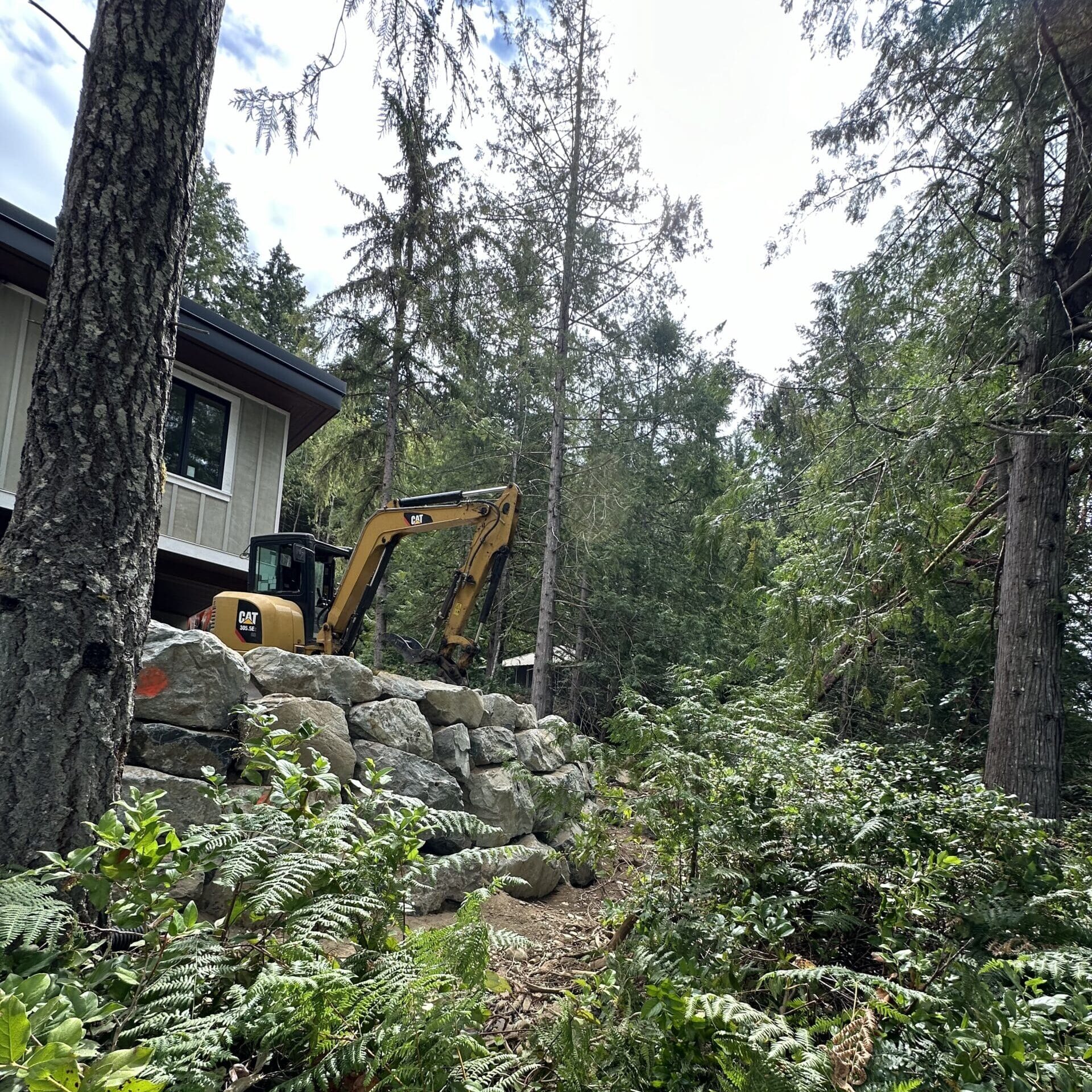
Mill Bay sits at the southern edge of the Cowichan Valley on Vancouver Island, bordered by the Malahat to the south and the coastal waters of Saanich Inlet to the east. The geology here is a mix of glacial till, sandstone bedrock, and pockets of heavy clay — all of which affect how a site is prepared. Properties closer to the waterfront or on sloped terrain often require significant rock breaking and engineered retaining solutions, while lots closer to the valley floor may deal with high water tables and seasonal drainage challenges.
The region's climate adds another layer of complexity. Heavy winter rainfall saturates soils, and construction schedules must account for the fact that earthwork performed in waterlogged conditions can compromise compaction and grading quality. Experienced operators know that timing site preparation for drier windows — or managing water on site with proper ditching — is critical to a successful outcome.
The Key Phases of Site Preparation
1. Land Clearing and Vegetation Removal
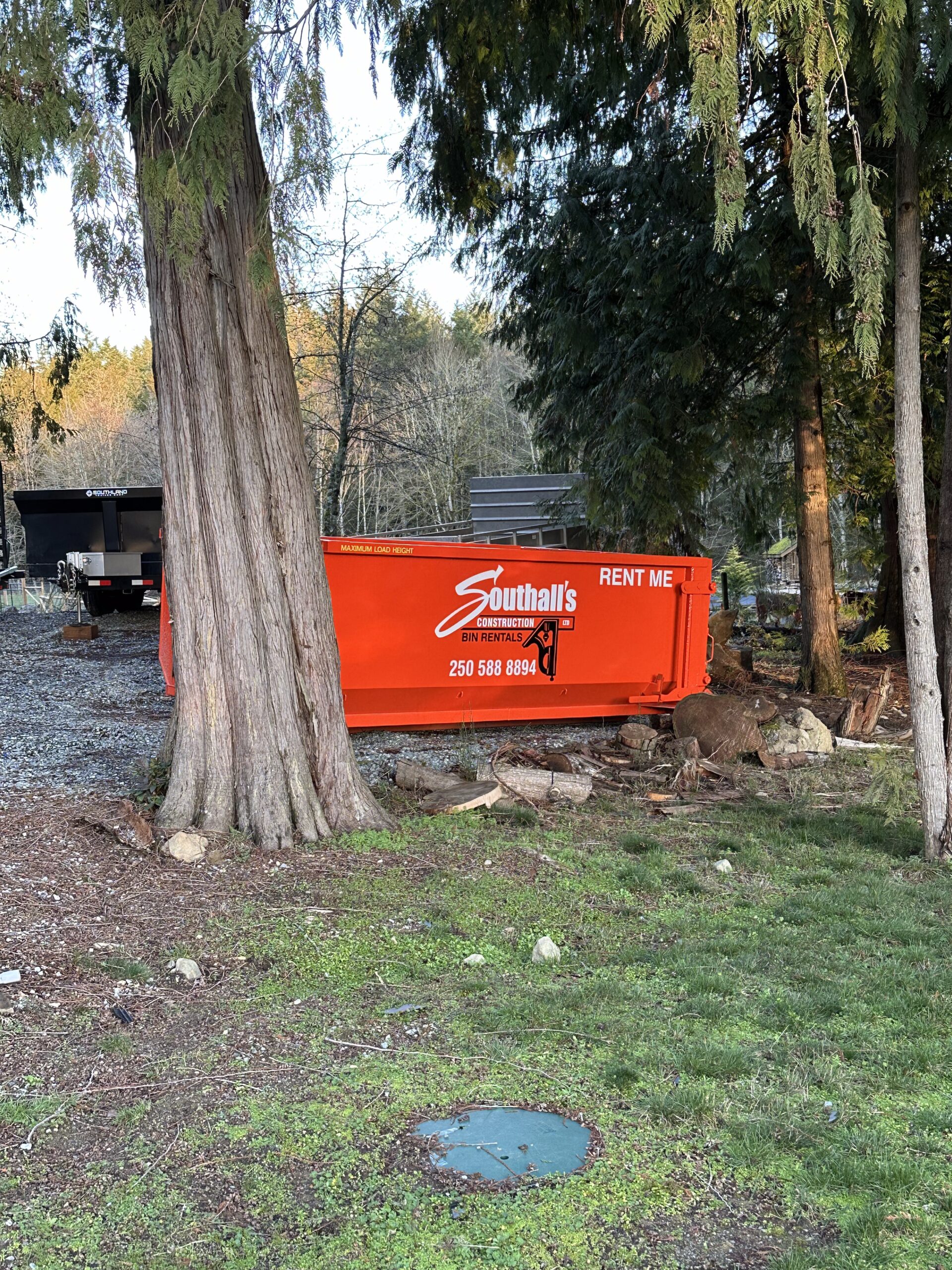
The first step on most Cowichan Valley properties is removing existing vegetation, trees, and brush. Depending on the lot, this may involve selective clearing to preserve certain trees for privacy or aesthetics, or full clearing for larger developments. Stumps must be grubbed out entirely — leaving root systems in place can cause settlement issues under foundations and driveways. Cleared organic material is typically hauled off site to approved composting or disposal facilities, and this is where having an integrated excavation contractor with their own dump truck services becomes a major efficiency advantage.
2. Topsoil Stripping and Stockpiling
Before any grading begins, the topsoil layer — usually the top 150 to 300 millimetres of organic-rich soil — is stripped and stockpiled on site. This material is valuable for final landscaping and should not be mixed with the underlying mineral soil or fill. On Mill Bay properties where the finished grade will include lawns, gardens, or replanting, preserving quality topsoil saves significant cost compared to importing new material later.
3. Rough Grading and Levelling
Rough grading establishes the general contours of the building site. This involves cutting high spots and filling low areas to create a level pad for the foundation, as well as establishing positive drainage slopes away from the building envelope. In Mill Bay, where many lots have natural slopes, grading and levelling requires careful planning to balance cut-and-fill volumes and minimize the amount of material that needs to be hauled off site. GPS-guided equipment helps achieve precise grades efficiently, reducing over-excavation and unnecessary soil relocation costs.
4. Rock Breaking and Removal
Bedrock is a common encounter on Vancouver Island properties, particularly in Mill Bay and the Malahat corridor. When rock sits at or near the planned foundation depth, it must be broken and removed to allow for proper footing placement, utility trenching, and drainage installation. Rock breaking is typically done with hydraulic breakers mounted on excavators, and in some cases, controlled blasting may be required for large volumes of hard rock. This is one of the most variable cost items in site preparation — a geotechnical investigation before purchasing a lot can save property owners from expensive surprises.
5. Utility Trenching and Service Installation
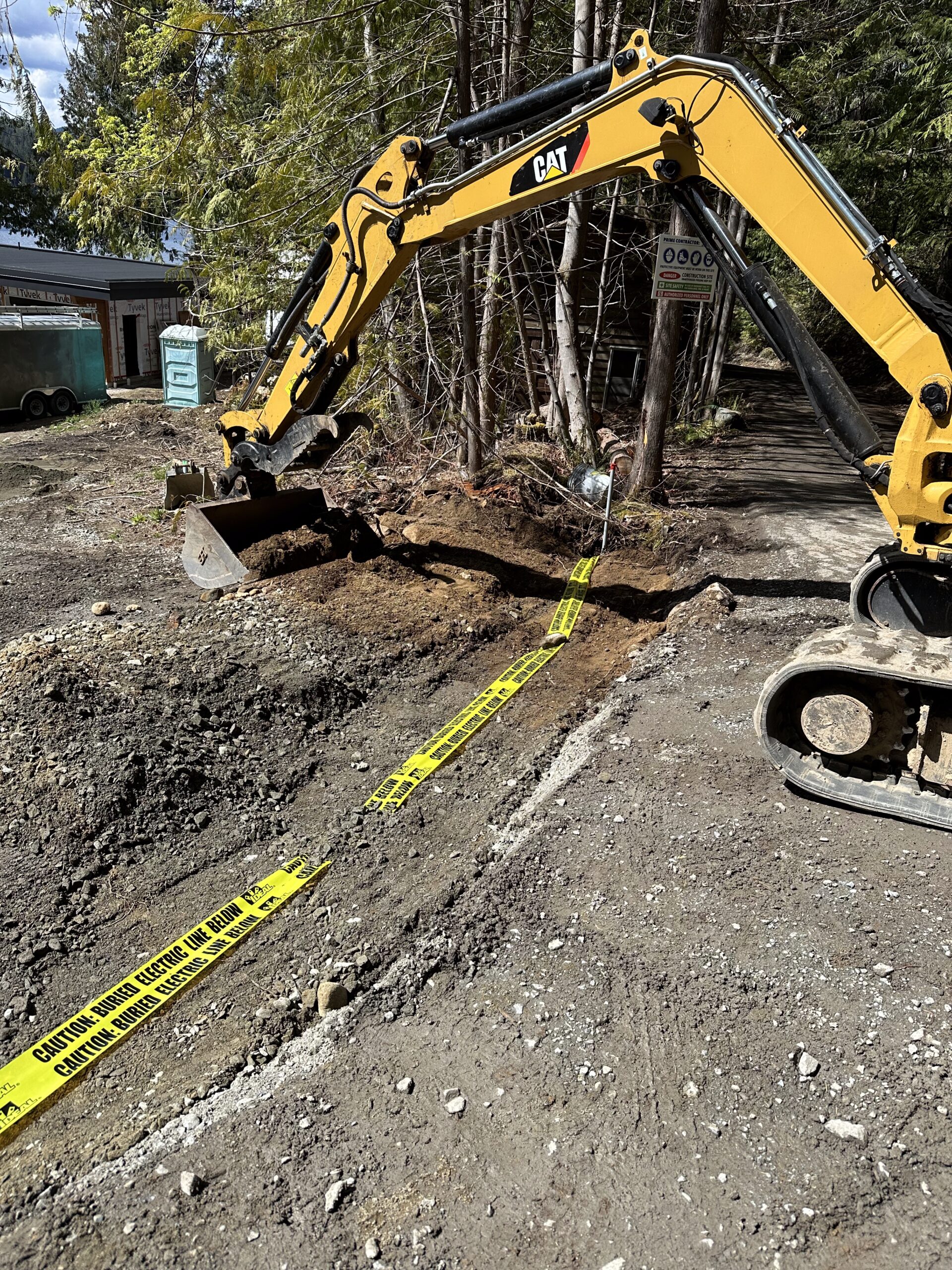
Once the building pad is established, trenches are excavated for underground services including water supply, sanitary sewer or septic connections, storm drainage, electrical conduit, and gas lines. In rural Mill Bay and Cowichan Valley properties that are not connected to municipal sewer, the septic system layout becomes a critical component of site preparation. The septic field location, tank placement, and required setbacks from wells, watercourses, and property lines all influence the overall site plan and must be coordinated with the excavation contractor early in the process.
6. Foundation Excavation
The final major earthwork phase is excavating to the exact depth and dimensions required for the foundation — whether that is a full basement, crawl space, or slab-on-grade. Precision matters here because over-excavation means additional backfill and compaction costs, while under-excavation requires rework. The excavated material (spoils) must be managed according to provincial soil relocation regulations, and having a contractor who understands both the excavation and the hauling logistics keeps the project moving efficiently.
Drainage: The Most Overlooked Element
In the Cowichan Valley's wet climate, drainage is arguably the most critical aspect of site preparation — and the one most often underestimated. Poor drainage leads to water pooling around foundations, saturated subgrades, and long-term settlement. A proper site preparation plan includes perimeter drains around the foundation, surface grading that directs water away from the building, and in many cases, connection to a storm drainage system or engineered rock pit. Properties with high water tables or seasonal springs may require additional measures such as French drains or curtain drains upslope of the building site.
Permits and Regulatory Considerations
Site preparation in the Cowichan Valley is subject to a range of permits and regulations that vary depending on whether the property falls within the Municipality of North Cowichan, the Town of Lake Cowichan, the Cowichan Valley Regional District (CVRD), or unincorporated areas. Building permits, development permits, and tree removal permits may all apply. Properties within the Agricultural Land Reserve (ALR) face additional restrictions on soil removal and land alteration. Environmental regulations protecting riparian areas, wetlands, and species at risk can also affect the scope and timing of site work. Working with an excavation contractor who understands local permitting requirements helps avoid costly delays and compliance issues.
Septic System Considerations for Rural Properties
Many Mill Bay and Cowichan Valley properties rely on on-site septic systems rather than municipal sewer connections. The site preparation phase must account for the septic system from the very beginning because the field location, soil percolation characteristics, and setback requirements directly influence where the building can be positioned on the lot. A registered on-site wastewater practitioner conducts percolation testing and designs the system, but the excavation contractor is responsible for installing the tank, distribution piping, and field bed. Coordinating these disciplines during site preparation prevents conflicts and rework later in the project.
How to Budget for Site Preparation
Site preparation costs in Mill Bay and the Cowichan Valley vary widely depending on the lot's size, slope, soil conditions, vegetation density, and rock presence. A flat, cleared half-acre lot with good soil may require relatively straightforward grading and trenching, while a steep, heavily treed lot with shallow bedrock can require weeks of specialized work. As a general planning guideline, property owners should expect site preparation to represent 10% to 15% of their total construction budget, though rock-heavy sites can push that figure higher.
The most effective way to control site preparation costs is to invest in thorough pre-construction investigation. A geotechnical report, a topographic survey, and a septic assessment — completed before finalizing the building design — allow the excavation contractor to provide an accurate estimate and identify potential cost drivers before work begins.
Why an Integrated Contractor Matters
Site preparation involves multiple interconnected tasks — clearing, grading, rock breaking, trenching, hauling, and drainage — and the most efficient projects are those where a single excavation contractor manages the full scope. When different operators handle clearing, excavation, and hauling separately, coordination gaps lead to idle equipment, duplicated mobilization costs, and scheduling conflicts. Southall Services operates as an integrated site preparation contractor with our own excavation equipment, dump trucks, and bin rentals, which means we manage the entire process from initial clearing through to a construction-ready building pad.
Getting Started on Your Mill Bay Project
Whether you are building a custom home on an oceanview lot, adding a secondary suite, or preparing a rural acreage for development, the site preparation phase sets the foundation — literally — for everything that follows. The Cowichan Valley's unique combination of terrain, climate, and regulatory requirements means that local experience matters. At Southall Services, we bring that experience to every project, from the initial site walk to the final grade check. If you are planning a build in Mill Bay or anywhere in the Cowichan Valley, reach out to discuss your site preparation needs and get a clear understanding of what your project will require.
Frequently Asked Questions
Need Help With Your Project?
Contact Southall Services for professional bin rentals, excavation, and hauling in the Cowichan Valley.