If you own property around Shawnigan Lake, you already know the reality of living with water. High water tables, seasonal runoff from surrounding hills, and the region's heavy clay soils create persistent drainage challenges that can undermine foundations, flood crawl spaces, and turn yards into marshland every winter. For many homeowners, the first sign of trouble is a soggy basement or standing water that refuses to drain, and the solution almost always starts with professional excavation.
At Southall Services, we have spent years working on properties throughout the Shawnigan Lake area, tackling everything from simple French drain installations to complex multi-system drainage projects. The terrain here is unlike other parts of the Cowichan Valley; the combination of glacial till, exposed rock, and proximity to the lake itself means that every property requires a site-specific approach. Cookie-cutter drainage solutions simply do not work in this environment.
Why Shawnigan Lake Properties Have Unique Drainage Problems
The geology around Shawnigan Lake is defined by heavy clay deposits left behind by glacial activity. Clay soil has extremely low permeability, meaning water that lands on the surface has nowhere to go. Instead of percolating down through the ground as it would in sandy or loamy soils, rainwater pools on the surface or flows laterally until it finds the lowest point on your property, which is often your foundation.
Compounding this issue is the high water table common to lakeside and low-lying properties. During the wet season, the water table can rise to within a metre of the surface, saturating the soil around your home and creating hydrostatic pressure against basement walls and footings. This pressure is the leading cause of foundation cracks and water infiltration in Shawnigan Lake homes.
The surrounding hillsides also contribute to the problem. Surface runoff from higher elevations channels downhill, and properties at the base of slopes often receive far more water than their lot alone would generate. Without proper interception and diversion systems, this runoff overwhelms natural drainage paths and saturates the ground around structures.
French Drain Systems: The Foundation of Effective Water Management
A French drain is one of the most effective and widely used drainage solutions for residential properties. The concept is straightforward: a perforated pipe is laid in a gravel-filled trench, creating a low-resistance pathway for groundwater to flow away from structures and toward a designated discharge point. The simplicity of the design is deceptive, however, because proper installation requires precise grading, correct pipe selection, and careful attention to filter fabric placement.
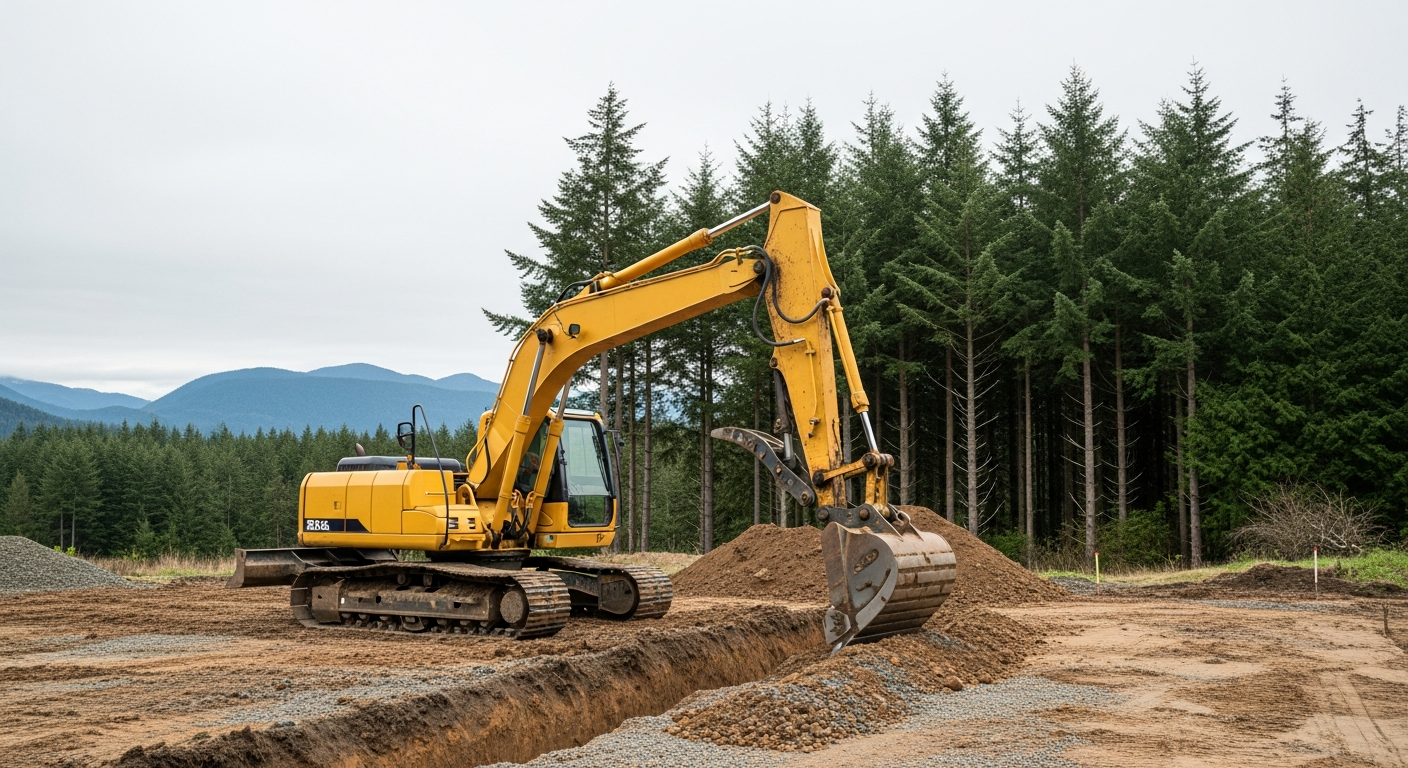
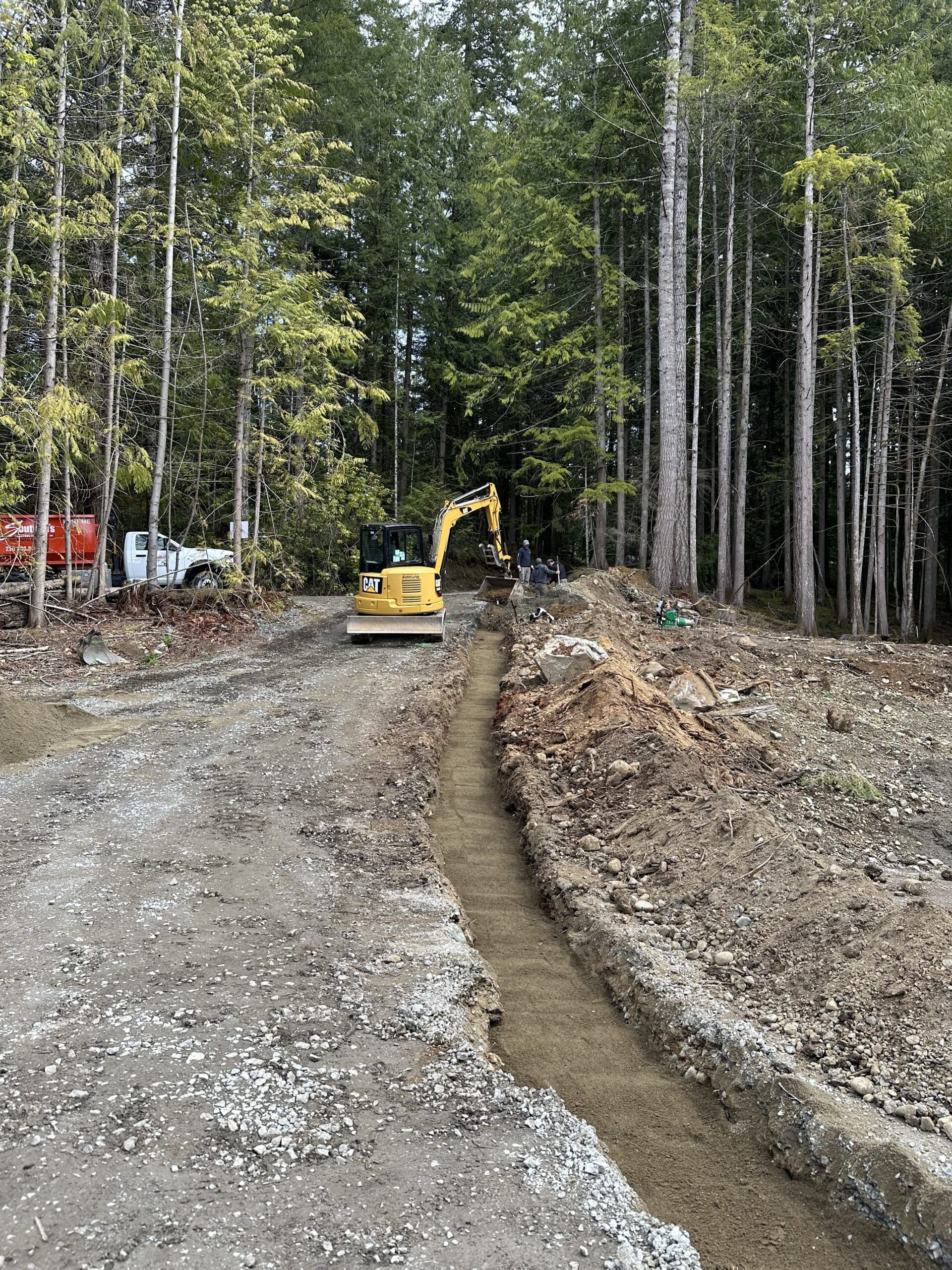
In Shawnigan Lake's clay soils, French drain installation demands heavier excavation than in other soil types. Clay is dense and sticky, requiring more powerful equipment and more time to trench. The trenches also need to be wider and deeper than in granular soils because the surrounding clay will not absorb any of the intercepted water. The entire burden of water transport falls on the drain system itself, which means the gravel envelope and pipe diameter must be sized generously.
Our excavation services include full French drain installation, from initial site assessment and grade surveying through to final backfill and surface restoration. We use clean, washed drainage rock rather than pit-run gravel to prevent fine particles from clogging the system over time. This attention to material quality is what separates a drainage system that lasts 30 years from one that fails in five.
Rock and Bedrock: Excavation Challenges Unique to the Region
Many Shawnigan Lake properties sit on or near exposed bedrock. While rock can actually assist drainage by creating natural channels for water flow, it also presents significant excavation challenges. Trenching through rock requires specialized equipment, and the cost and timeline of a drainage project can change substantially when bedrock is encountered at shallow depths.
Interestingly, the interaction between rock and clay creates some of the most difficult drainage conditions we see. Water flows along the surface of the bedrock until it hits clay, where it pools and has no way to drain vertically. This creates underground "ponds" that can go undetected until they cause damage. Identifying these conditions early through proper site investigation saves homeowners from costly surprises during construction.
When bedrock prevents traditional trenching, we employ alternative approaches such as surface swales, shallow interceptor drains, and gravity-fed discharge systems that work with the rock rather than against it. The goal is always to find the most efficient path to move water away from your home using the natural topography of the site.
Septic Systems and Drainage: A Critical Relationship
Many properties around Shawnigan Lake rely on septic systems rather than municipal sewer connections. The performance of a septic system is directly tied to the drainage characteristics of the surrounding soil. When the water table is high or the drain field becomes saturated from poor site drainage, septic systems can fail, creating both a health hazard and an expensive repair situation.
Conventional gravity-fed septic systems require a minimum vertical separation between the drain field and the seasonal high water table. In areas where this separation cannot be achieved naturally, engineered solutions such as raised mound systems or pressure-dosed fields may be required. Both of these options involve significant excavation work, including importing fill material, grading, and installing distribution infrastructure.
Southall Services works closely with septic designers and environmental consultants to ensure that drainage improvements on a property complement rather than conflict with septic system requirements. Redirecting surface water away from a drain field, for example, can extend the life of a septic system by years. Conversely, a poorly planned drainage project that sends water toward a drain field can cause immediate and severe septic failure.
When Is the Best Time to Excavate in Shawnigan Lake?
Timing is a critical factor for excavation projects in the Shawnigan Lake area. The ideal window for drainage work falls between late May and early October, when the water table is at its lowest and soil conditions are most workable. Excavating during the dry season allows us to see exactly where water collects and flows during the wet months, because the staining and erosion patterns left behind are clearly visible in dry conditions.
That said, emergency drainage work sometimes cannot wait for summer. Foundation flooding and septic failures demand immediate attention regardless of the season. Winter excavation in Shawnigan Lake requires additional measures including dewatering pumps, erosion control, and careful management of saturated soils. These measures add cost, but they are necessary to protect both the property and the surrounding environment.
We recommend that homeowners who notice drainage problems during the winter months contact us to schedule a site assessment. Even if the work must wait until the dry season, an early evaluation allows us to develop a detailed plan and secure any necessary permits and regulations ahead of time, ensuring the project can begin as soon as conditions allow.
Comprehensive Drainage Solutions: Beyond the French Drain
While French drains are the backbone of most residential drainage systems, effective water management on Shawnigan Lake properties often requires a combination of approaches. Curtain drains intercept water flowing downhill before it reaches a structure. Catch basins collect surface water from low spots and route it to underground piping. Swales, which are shallow, graded channels, direct surface runoff along controlled paths.
- Perimeter drains around foundations to relieve hydrostatic pressure
- Curtain drains upslope to intercept hillside runoff
- Catch basins in low areas prone to standing water
- Surface swales to redirect overland flow away from structures
- Dry wells for controlled infiltration in areas with adequate soil depth
- Sump pump systems for below-grade spaces where gravity drainage is not possible
The right combination depends entirely on the specific conditions of your property. A thorough site assessment, including soil testing and topographic analysis, is essential before any excavation begins. Southall Services provides this assessment as part of our excavation contractor services, ensuring that every dollar spent on drainage delivers measurable results.
Working with Local Soil and Hauling Logistics
Drainage projects generate significant volumes of excavated material, particularly in clay soils where wide, deep trenches are required. Managing this spoil material is a critical part of the project logistics. Clay soil is heavy, difficult to repurpose on site, and subject to soil relocation regulations when moved off the property.
Southall's integrated approach means we handle both the excavation and the hauling services, maintaining a clean chain of custody for all material leaving your site. For properties that need fill material brought in, whether for raised septic mounds, re-grading, or landscape restoration, our dump truck fleet ensures timely delivery of the correct materials.
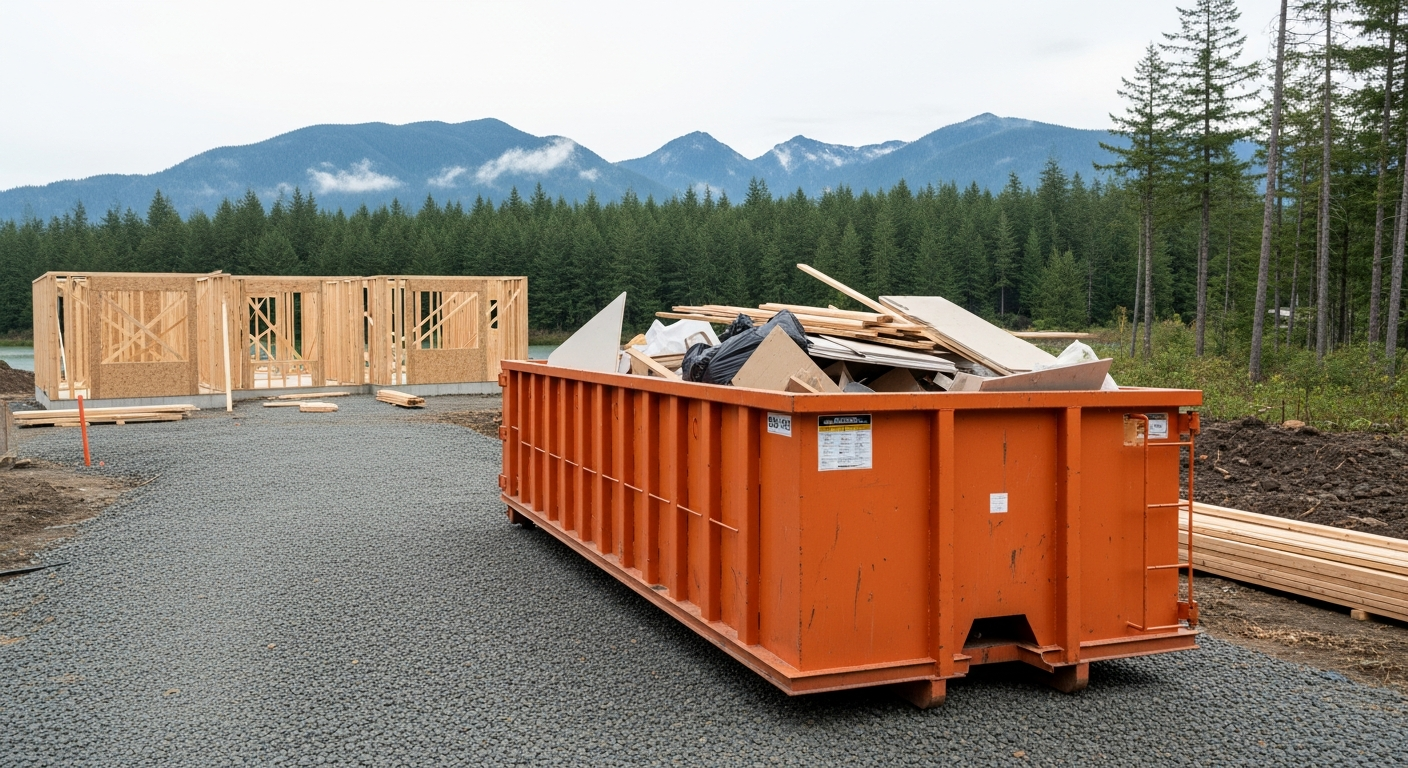
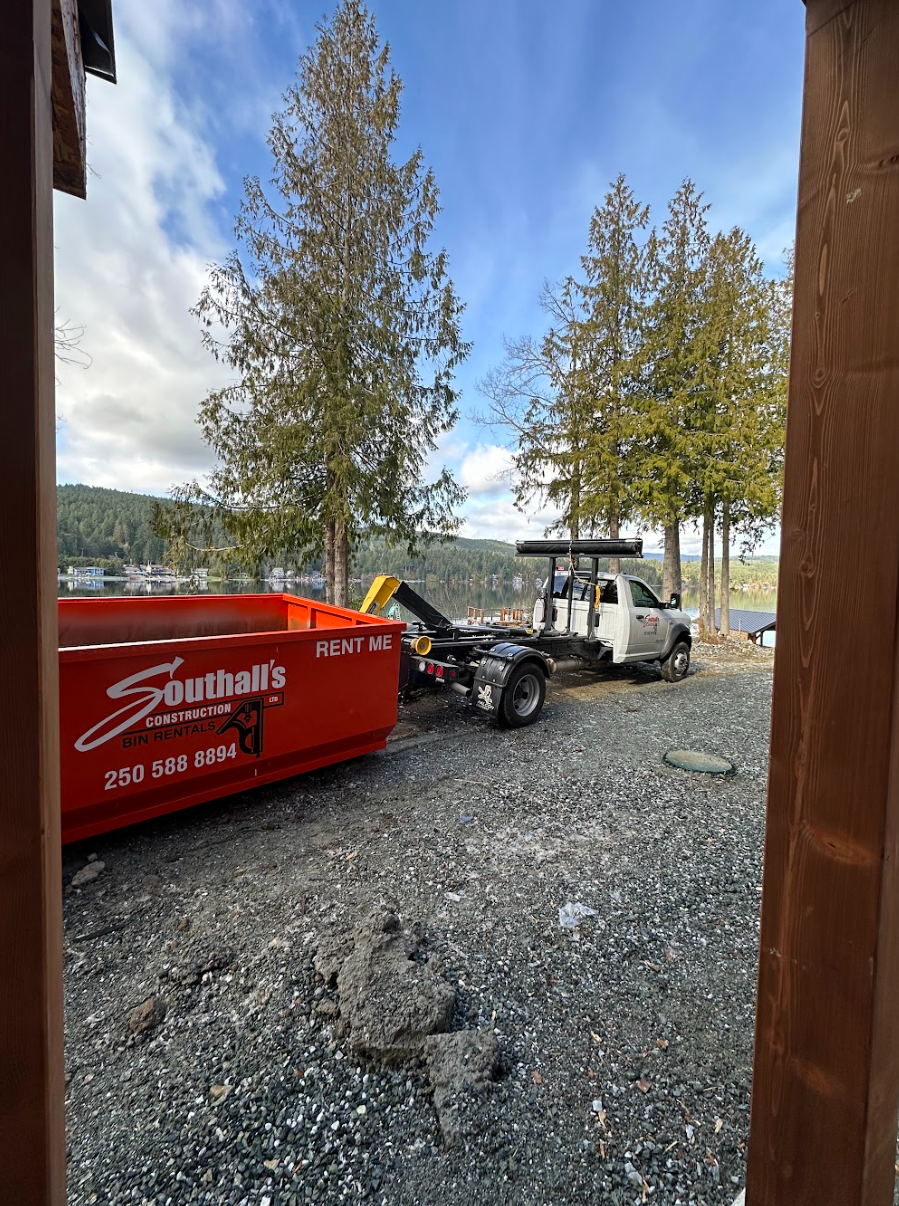
On larger drainage projects, bin rentals can also play a role. Old pipe, broken concrete from failed drainage systems, and construction debris from foundation repairs all need proper disposal. Having a dedicated bin on site keeps the work area organized and prevents delays caused by material handling.
Protecting Your Investment for the Long Term
A properly designed and installed drainage system is one of the best investments you can make in a Shawnigan Lake property. Water damage to foundations is cumulative and expensive to repair, while chronic moisture problems lead to mold, structural deterioration, and declining property values. Addressing drainage proactively, before damage occurs, is always more cost-effective than reactive repairs.
We encourage property owners to think of drainage as infrastructure, not unlike a roof or a foundation. It requires professional design, quality materials, and skilled installation. It also requires periodic maintenance, including inspection of discharge points, cleaning of catch basins, and monitoring of system performance during heavy rain events.
Whether you are dealing with an existing water problem or planning a new build on a Shawnigan Lake property, Southall Services has the equipment, the local knowledge, and the experience to deliver drainage solutions that work. Contact us to schedule a site assessment and get a detailed plan tailored to your property's specific conditions.
Frequently Asked Questions
Need Help With Your Project?
Contact Southall Services for professional bin rentals, excavation, and hauling in the Cowichan Valley.