You've planned the demo. You've lined up your trades. You've budgeted for materials, labour, and permits. Then the first wall comes down and suddenly there's a mountain of drywall, old insulation, broken tile, and rotted lumber sitting in your driveway with nowhere to go.
Waste removal is one of the most consistently underestimated parts of any renovation project. Not because it's complicated, but because it's easy to leave for later until later becomes a problem.
The most common mistake? Ordering the wrong bin size. Either you go too small and end up paying for a second haul, or you rent something larger than you need and spend money on space you never use.
This guide helps you get it right the first time.
Why Bin Size Is a Budget Decision, Not Just a Logistics One
Most homeowners think of bin rental as a flat, predictable cost. Pick a size, set it in the driveway, fill it up, done. And when it goes that way, it's simple and cost-effective.
The budget risk enters when the size is wrong.
Too small means you're calling for an early pickup, waiting for a new bin to be delivered, and potentially halting demo work in the meantime. You also pay for two rentals, two deliveries, and two hauls instead of one.
Too large isn't catastrophic, but you're paying for cubic yardage you don't fill, which chips away at a renovation budget that already has plenty of demands on it.
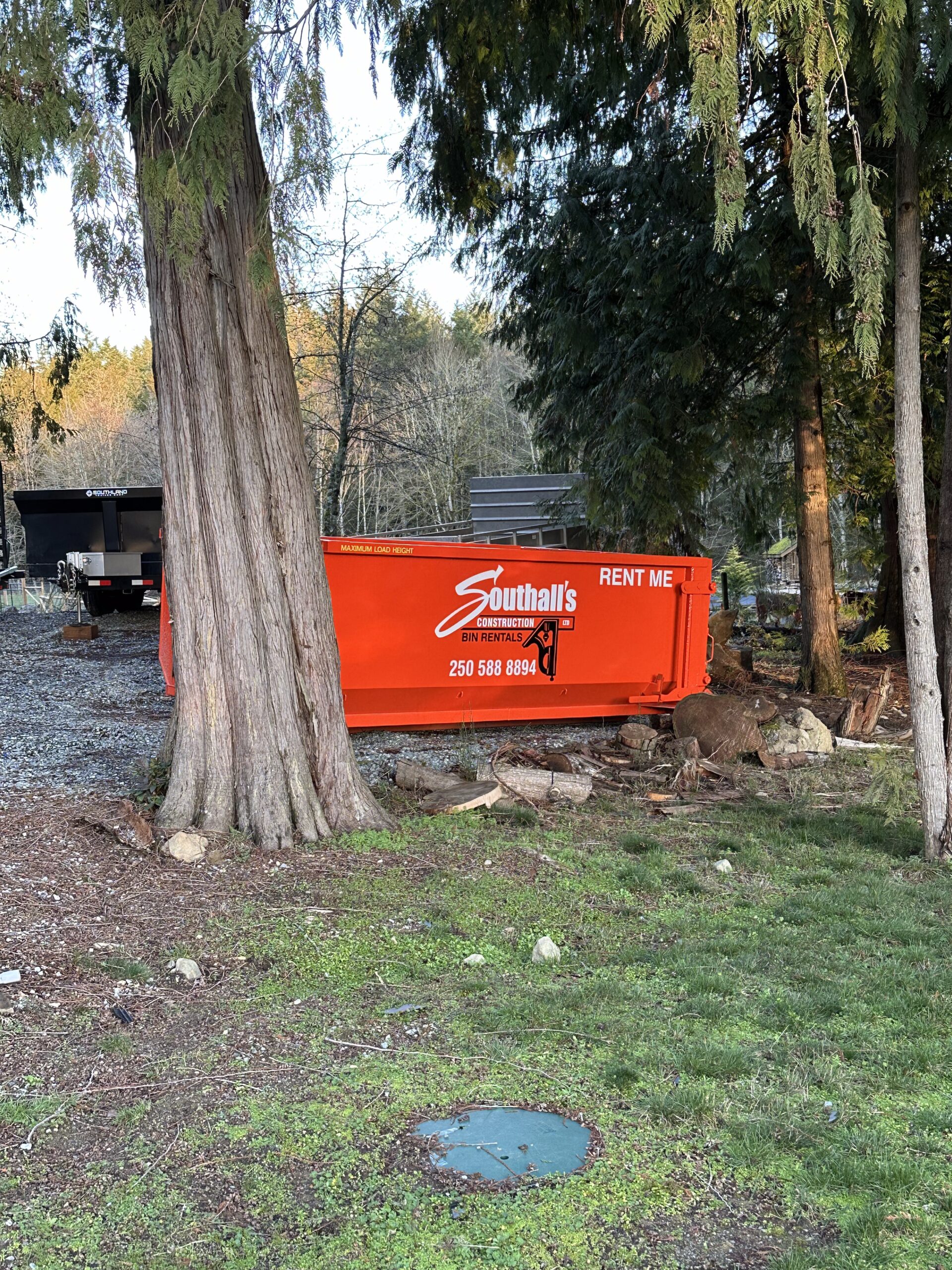
Getting the size right is a small decision with a real impact on keeping your project on track and on budget. If you're ready to book, you can request a bin rental directly through Southall Services at /bin-rental-request/.
A Practical Guide to Bin Sizes and What They Handle
Bin sizes are measured in cubic yards. Here's an honest, no-jargon breakdown of what each size is designed for.
Small Bins (4 to 6 Yards)
Best for single-room cleanouts, minor bathroom updates, flooring removal in one or two rooms, landscaping debris, and garage cleanouts.
A 4 to 6 yard bin is roughly the size of a large pickup truck bed. It's ideal for focused, contained projects where you know the waste volume is limited. If you're replacing flooring in a bedroom and a hallway, or pulling out an old vanity and toilet, this is likely the right fit.
Where homeowners go wrong: ordering this size for a full kitchen gut or a multi-room renovation. It fills faster than expected, especially once drywall, cabinets, and subfloor hit the pile.
Medium Bins (10 to 12 Yards)
Best for kitchen renovations, bathroom remodels, single-floor demo work, small additions, and window and door replacements throughout a home.
This is the most commonly ordered size for mid-scale residential renovations in the Duncan area. It handles the debris volume of a real renovation without the footprint or cost of a large bin. A kitchen gut including cabinets, countertops, flooring, and drywall will typically fit within a 10 to 12 yard bin.
Where homeowners go wrong: underestimating the volume of insulation. Old batt insulation is light but bulky and fills a bin quickly. If your project involves opening walls or ceilings, factor this in when sizing.
Large Bins (14 to 20 Yards)
Best for whole-home renovations, major additions, full-floor demo, large-scale exterior work, roofing replacements, and estate cleanouts.
A large bin is appropriate when you're touching multiple rooms, multiple systems, or large surface areas in a single project phase. If you're gutting a main floor or doing a full roof-off addition, this is where you need to be.
Where homeowners go wrong: ordering this size for a project that's really a medium. Usually this happens because the project feels big emotionally, even if the actual debris volume is contained.
How to Estimate Your Debris Volume Before You Call
You don't need to be precise. You just need to be in the right ballpark. Here's a simple way to estimate before you pick up the phone.
First, list every material coming out. Walk through your project scope and write down everything being removed: drywall, flooring (and what type), cabinetry, fixtures, insulation, concrete, roofing materials, lumber, tile. The list itself is useful.
Second, think in truckloads. As a rough mental model, one cubic yard is approximately what fits in the box of a standard half-ton pickup truck. A 10-yard bin holds roughly 10 truckloads of debris. Most single-room renovations fall in the 4 to 6 truckload range. Whole kitchens often hit 8 to 12.
Third, when in doubt, round up one size. The difference in cost between a medium and a large bin is almost always less than the cost of a second delivery and haul. If you're genuinely unsure whether your project is a 10 or a 14, go to the 14. The math favours it.
What Goes in the Bin (And What Doesn't)
Not everything from a renovation site can go into a standard bin. Knowing this ahead of time prevents headaches at pickup.
Generally accepted materials include drywall and plaster, wood framing and lumber, flooring (hardwood, laminate, vinyl, carpet), cabinets and millwork, roofing shingles, general construction debris, and concrete and masonry (check weight limits).
Generally not accepted: hazardous materials such as asbestos and lead paint which require specialized disposal, propane tanks, batteries and chemicals, tires, mattresses (in some cases), and electronics.
If your renovation involves an older home, particularly anything built before 1990, have a conversation about potential hazardous materials before your project begins. Asbestos in old floor tiles, insulation, or ceiling textures is not uncommon in the Cowichan Valley, and it changes your disposal plan entirely.
Placement Matters More Than Most People Think
Where the bin sits affects your project more than you'd expect. A few things to think through before delivery.
Most residential deliveries go in the driveway. It's easier, it keeps the street clear, and it protects your bin from passing traffic. If you need street placement, check with the District of North Cowichan about permit requirements.
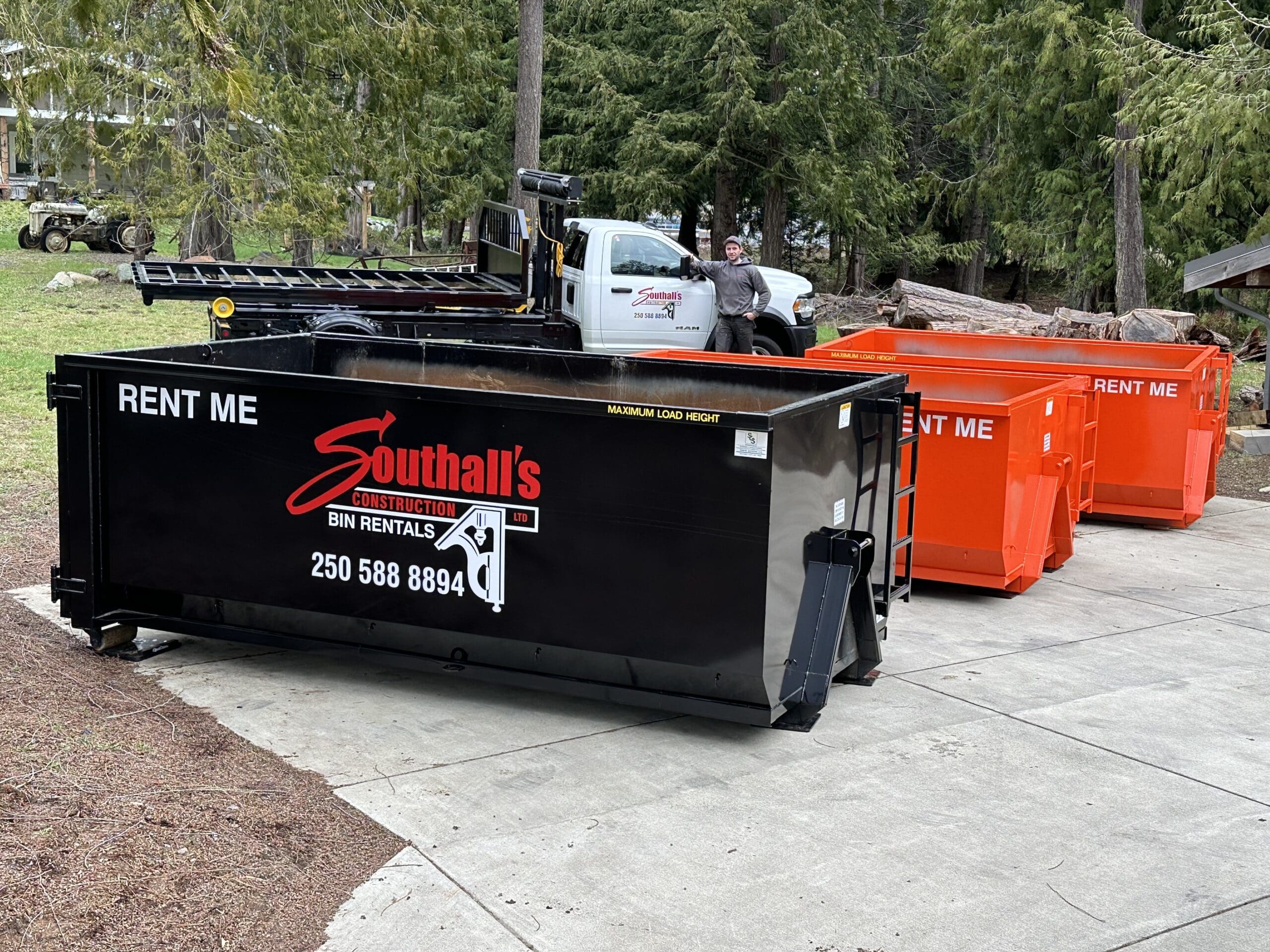
Bins are heavy. If you have a newer driveway or decorative concrete, ask about boards or planks under the bin feet to distribute the weight and prevent surface damage.
The bin should be close enough that your demo crew isn't hauling debris across the entire property, but not so close to the work site that it creates a safety hazard. Think through the path from where demo is happening to where waste will land.
Delivery trucks need vertical clearance to drop the bin. Low-hanging branches, wires, or a carport roof can complicate placement. Check your intended spot before the truck arrives.
Timing Your Bin Rental to Your Project Schedule
Ordering a bin at the right moment is as important as ordering the right size.
Order for the start of demo, not the start of the project. You don't need a bin sitting in your driveway during the planning and pre-construction phase. Schedule delivery for the day demo begins or the day before.
Build in a buffer at the end. Renovations rarely finish exactly on schedule. When booking your rental period, add a few days beyond your expected project completion. Extending mid-rental costs more than booking the buffer upfront.
Coordinate with your trades. If you have multiple contractors on site at different times, make sure whoever is doing demo and generating debris knows the bin is there and what can go in it. A brief conversation prevents costly contamination issues.
Are you also bringing in equipment for excavation or site prep? Southall Services handles excavation in Duncan and the Cowichan Valley as well, so you can coordinate both services in one call. Visit /excavation/ for details.
What About Dump Truck Service?
For some projects, a bin isn't the most efficient option. If you're clearing a large volume of loose material quickly, such as gravel, fill dirt, or demolition debris from a major dig, dump truck service may be faster and more cost-effective than a stationary bin rental. Learn more at /dump-truck-services/.
Not sure which is right for your project? Call Southall Services and we'll walk you through it. No pressure and no guesswork.
Southall Services: Straight Answers for Cowichan Valley Homeowners
At Southall Services, we've helped homeowners across Duncan, Shawnigan Lake, Mill Bay, Cobble Hill, Chemainus, and Lake Cowichan manage renovation waste for years. We know the Valley, we know the projects people are tackling, and we know how frustrating it is to deal with a bin company that gives you vague information and leaves you guessing.
When you call us, you'll get a straightforward conversation about your project, a recommendation you can trust, and a bin that shows up when we say it will.
No surprises. No second-guessing. Just the right bin, on time, at a fair price.
Ready to get the right bin for your project? Request a bin rental from Southall Services at /bin-rental-request/.
Frequently Asked Questions
Need Help With Your Project?
Contact Southall Services for professional bin rentals, excavation, and hauling in the Cowichan Valley.