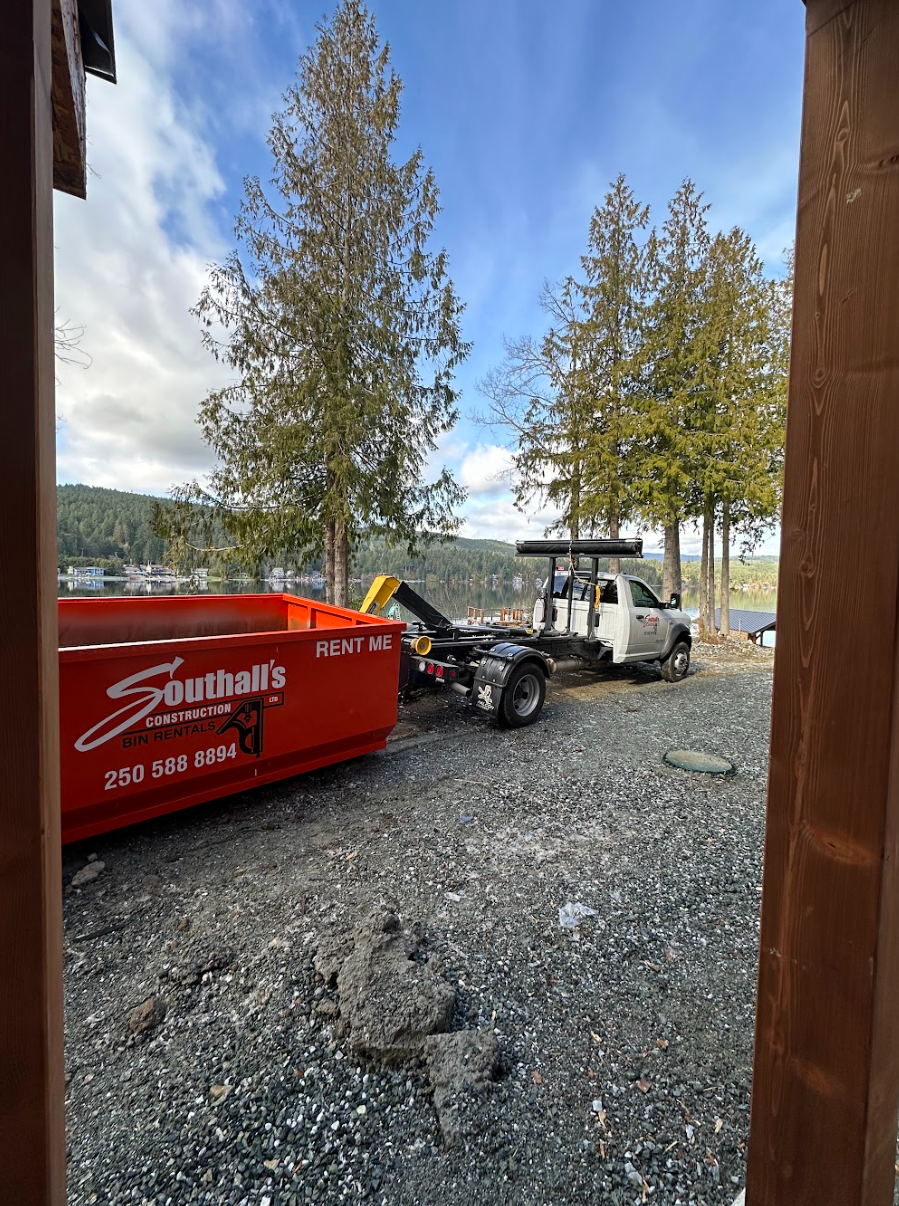
If you run a construction crew in Duncan or anywhere in the Cowichan Valley, bin service is one of those things that either works quietly in the background or becomes a problem that slows down your entire schedule. A full bin sitting on site for three days while you wait for a swap is lost productivity. A bin that shows up late on demo day puts your crew behind before anyone picks up a tool.
We work with general contractors, renovation companies, roofers, landscapers, and custom home builders across Duncan, Shawnigan Lake, Mill Bay, Cobble Hill, and Lake Cowichan. The service is straightforward: we deliver the bin, you fill it, we haul it when you are ready. But the details of how that works on a live construction site are different from a weekend homeowner cleanup, and that is what this post covers.
If you already know what you need and want to get a bin scheduled, call Brad at (250) 588-8894 or request a bin online. For everyone who wants the full picture first, keep reading.
Why Contractor Bin Rental Is Different From Residential
Most bin rental content online is written for homeowners doing a one-time garage cleanout or a bathroom renovation. The needs are different when bins are part of your daily operations.
Volume and Frequency
A homeowner rents one bin for one project. A contractor working on a new build might need three or four bins over the course of the project: one for demo, one for framing cutoffs and packaging, one for drywall and finishing waste, and potentially one for final site cleanup. Some contractors run multiple job sites simultaneously and need bins rotating across locations on a weekly basis.
Timing Reliability
On a residential project, a one-day delay on bin delivery is an inconvenience. On a commercial or multi-trade job site, a delay can cascade. If the demo bin is not there when the demo crew arrives, that crew either stands around or moves to another job and you lose your spot in their schedule. Reliable delivery and pickup windows matter more when you are coordinating multiple trades.
Waste Stream Knowledge
Contractors generate specific waste streams that affect what can go in the bin and how it gets disposed of. Asphalt shingles, treated lumber, drywall, concrete, and mixed construction debris all have different disposal requirements in BC. Knowing what can be mixed and what needs separation before the bin arrives saves time and avoids contamination surcharges at the receiving facility.
Site Logistics
A homeowner puts the bin in their driveway. On a construction site, placement needs to account for equipment access, material staging, grade conditions, and sometimes municipal right-of-way permits if the bin sits on a road or sidewalk. Getting the placement conversation right before delivery prevents the kind of repositioning that wastes everyone's time.
Bin Sizes and What They Handle on a Job Site
We run 10, 14, and 20 yard bins. Here is how each one fits into a typical construction workflow.
10 Yard Bins
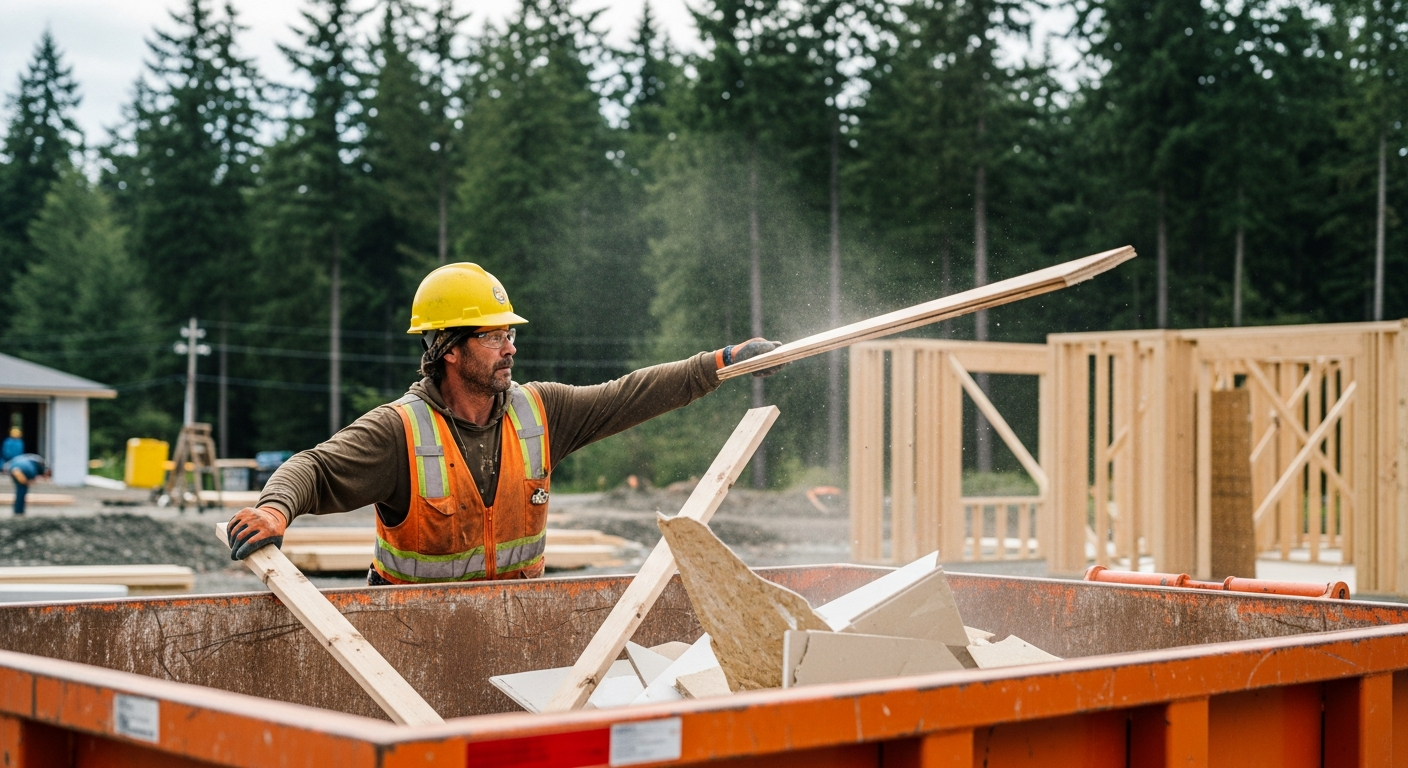
The most common choice for smaller renovation projects: a kitchen gut, a bathroom demo, a deck teardown. For contractors, a 10 yard bin works well as a secondary bin for clean waste streams like cardboard, packaging, and light framing cutoffs. On tight urban lots in Duncan where space is limited, a 10 yard bin often fits where a larger one will not.
14 Yard Bins
This is the workhorse for mid-size renovation and construction projects. A 14 yard bin handles the full demo output of a standard residential renovation, including cabinets, flooring, drywall, and framing. For new construction, it is a practical choice for each phase of waste generation. Most contractors working on single-family projects in the Cowichan Valley use 14 yard bins as their default.
20 Yard Bins
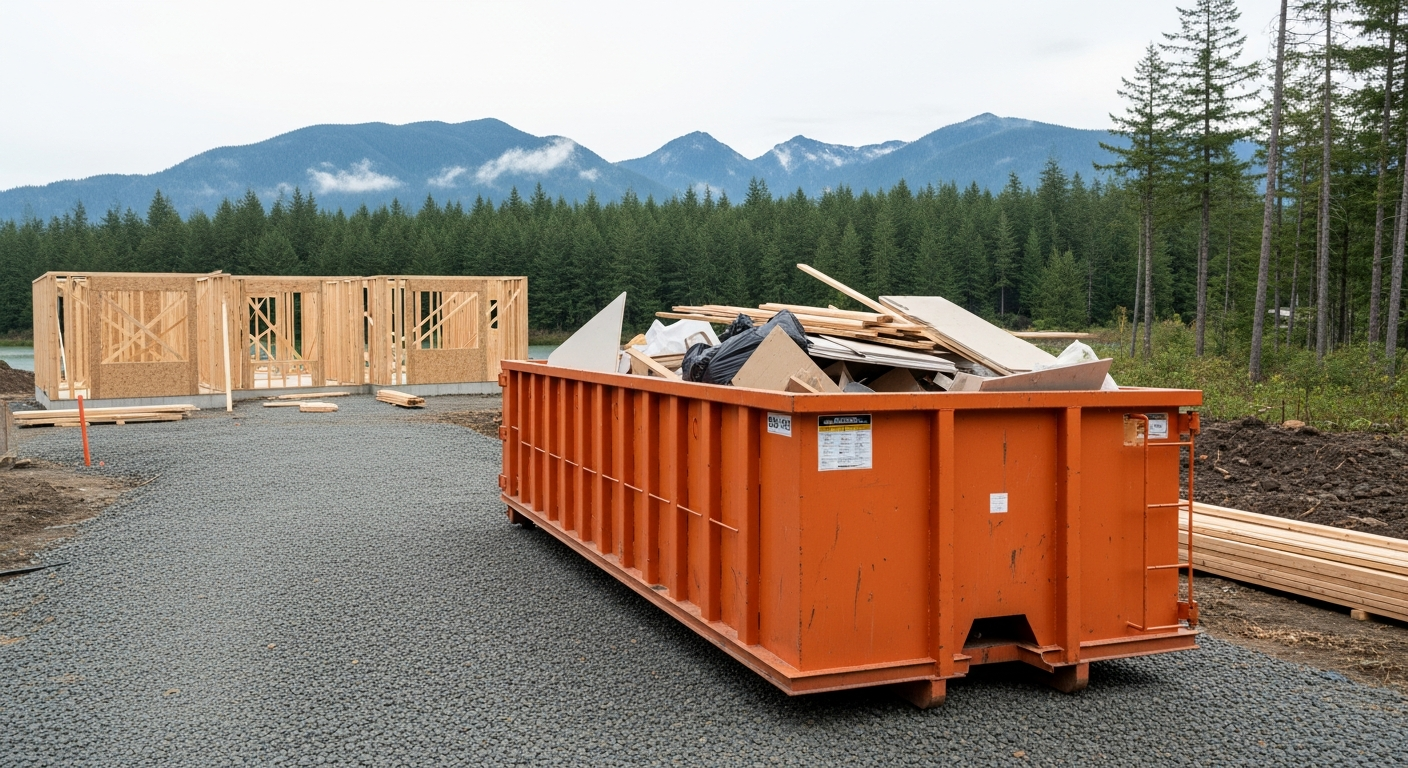
For large-scale demo, new builds, and commercial projects. A full roof tear-off on a larger home will fill a 20 yard bin. A whole-home renovation generates enough waste to justify the larger size. On new construction sites where the schedule is tight and you do not want to wait for a swap mid-phase, a 20 yard bin gives you the capacity to keep working.
If you are not sure which size fits your project, we would rather you call and describe the job than guess. Ordering a bin that is too small means paying for a swap and a second haul. Ordering one that is too large costs more upfront than necessary. A quick conversation gets it right the first time.
For a deeper breakdown of how bin sizes compare, our post on choosing the right bin size covers the residential side in more detail. The same sizing logic applies to contractor projects, just scaled to commercial volume.
What Can and Cannot Go in a Construction Bin
This is the section that saves you money. Contamination surcharges at disposal facilities are real, and they get passed through to the customer. Knowing the rules before you start loading saves hassle on both ends.
Generally Accepted in Construction Bins
- Lumber (untreated and treated)
- Drywall and plaster
- Concrete and masonry (weight limits apply; we will flag this at booking)
- Asphalt shingles
- Metal (framing hardware, flashing, ductwork)
- Insulation (fiberglass, rigid foam)
- Flooring materials (hardwood, laminate, tile, vinyl)
- Cardboard and packaging from materials deliveries
Not Accepted
- Hazardous materials (paint, solvents, adhesives, fuel)
- Asbestos-containing materials (common in pre-1990 buildings in the Cowichan Valley; requires specialized removal and disposal)
- Electronics and appliances with refrigerants
- Tires
- Soil and dirt (we handle this through our dump truck and hauling services instead)
The grey area is mixed loads. Heavy materials like concrete or roofing shingles can push the bin over weight limits. If your project involves a significant amount of heavy material, let us know at booking so we can recommend the right bin or suggest splitting heavy and light waste into separate bins. This is cheaper than an overweight surcharge.
We have a full guide on what you can put in a rental bin in BC if you want the complete list.
Scheduling Bins Across Multiple Job Sites
Contractors who run two or three active sites in the Cowichan Valley at the same time need a bin service that can keep up. Here is how we handle multi-site scheduling.
Advance Booking
If you know your project timeline, booking bins in advance locks in availability. During the busy season, May through October, bins move fast. Contractors who book a week or two ahead rarely have delivery issues. Same-day and next-day requests are possible when inventory is available, but advance notice is always the safer approach.
Swap Scheduling
On longer projects, you will fill bins and need swaps. A swap means we pick up the full bin and drop an empty one in the same trip. For contractors running tight timelines, scheduling swaps in advance keeps the job site moving without a gap where there is no bin available. Let us know your estimated fill rate and we will build a swap schedule that matches your pace.
Flexible Pickup
Not every project runs on schedule. If a bin fills faster than expected or the project stalls and the bin sits for an extra week, we work with you. Communication is the key; if you know the timeline is shifting, a quick call lets us adjust without disrupting your next delivery.
Consistent Point of Contact
When you work with Southall Services, you deal with Brad directly. There is no call centre, no dispatch queue, no explaining your site layout to a different person every time. That matters when you are managing multiple projects and need someone who already knows your typical job site requirements.
Job Site Placement: Getting It Right the First Time
Where the bin sits on your job site affects how efficiently your crew uses it and how easily we can service it.
Access for Delivery and Pickup
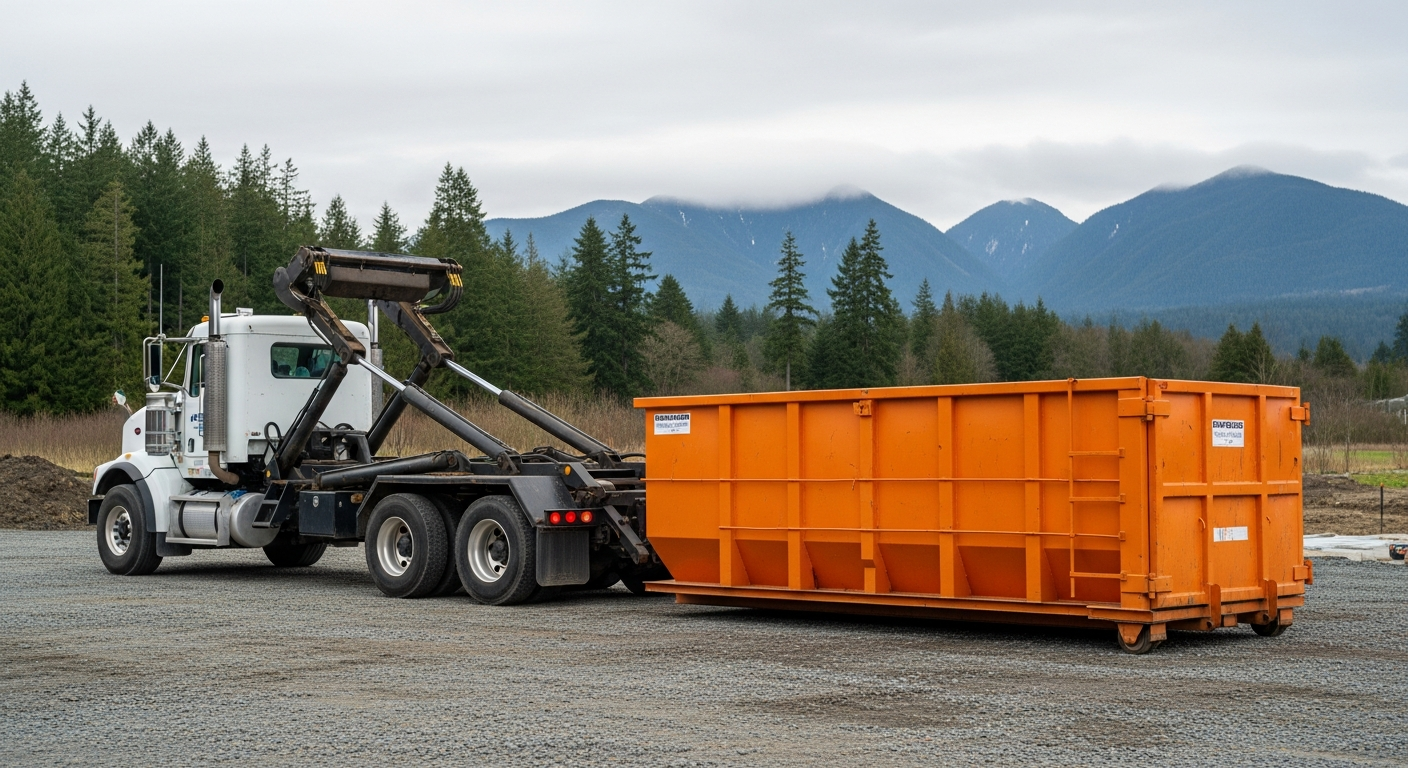
Our trucks need a clear path to place and retrieve the bin. Overhead obstructions like power lines and tree branches, narrow access roads, and soft ground conditions all affect placement options. On rural Cowichan Valley properties with gravel driveways or unpaved access, ground conditions during the wet season can limit where a loaded bin can sit without sinking.
Proximity to the Work Area
The closer the bin is to where the waste is generated, the less time your crew spends hauling debris across the site. On a demo project, positioning the bin directly below a window or chute opening, if the site allows, can cut debris handling time significantly.
Avoiding Conflicts With Other Trades
On a multi-trade site, placement needs to leave room for material deliveries, equipment access, and other contractor vehicles. A bin that blocks the concrete truck's path or the lumber delivery access point creates coordination problems that cost everyone time.
Municipal Requirements
If the bin needs to sit on a public road or sidewalk in Duncan, North Cowichan, or other Cowichan Valley municipalities, a right-of-way permit may be required. We can advise on whether your placement plan triggers permit requirements, but securing the permit is the contractor's or property owner's responsibility.
The Cost Conversation
We do not publish fixed prices because the cost depends on bin size, rental duration, waste type, and location within our service area. What we can tell you is how the pricing works so there are no surprises on your invoice.
Base Rental Fee
This covers delivery, a set rental period, typically seven days for standard rentals, and pickup. The base fee varies by bin size.
Rental Extensions
If you need the bin longer than the standard rental period, extension fees are charged per day. For contractors on longer projects, we offer extended rental arrangements that reduce the per-day cost compared to daily extensions.
Disposal Fees
Disposal is based on weight and waste type. Clean, sortable waste costs less to dispose of than mixed loads. Heavy materials like concrete and shingles carry higher per-tonne rates at receiving facilities, which is reflected in the disposal charge.
Overweight Charges
Each bin size has a weight limit. Exceeding it triggers an overweight fee. This is the most avoidable extra charge on a bin rental invoice, and it comes down to knowing what is going in the bin and choosing the right size upfront.
No Hidden Fees
We quote the cost before delivery. If the scope changes, heavier material than expected or a longer rental period, we communicate the adjustment before it shows up on an invoice. Contractors who work with us regularly know the pricing structure and rarely encounter surprises.
For a broader look at how pricing works in the region, our post on the true cost of bin rentals breaks it down from the homeowner side. The same structure applies to contractor accounts, with volume and frequency factored into the relationship.
Why Local Matters for Construction Bin Service
There are provincial waste hauling companies that serve the Cowichan Valley from depots in Victoria or Nanaimo. They work fine for some situations. But for contractors who need responsive, reliable bin service on active job sites, working with a local operator has practical advantages.
Shorter Response Times
Our equipment is based in Cobble Hill. Deliveries and pickups across Duncan, Shawnigan Lake, Mill Bay, and the surrounding area do not involve a 90-minute drive from a distant depot. When you need a swap tomorrow morning, proximity matters.
Local Disposal Knowledge
We know which receiving facilities in the Cowichan Valley accept which waste streams, what their current rate structures look like, and how to route loads efficiently. That knowledge translates to lower disposal costs and fewer rejected loads.
Relationship Continuity
When you work with the same local operator across multiple projects, the service gets more efficient over time. We learn your typical bin preferences, your site access patterns, and your scheduling rhythm. That saves you time on every subsequent booking.
Getting Started
If you are a contractor working in Duncan or anywhere in the Cowichan Valley and you need construction bin service, the fastest path is a direct conversation.
Call Brad at (250) 588-8894 to discuss your project, or submit a bin rental request online. Let us know the job site location, the type of waste, your estimated timeline, and the bin size if you have a preference. We will confirm availability and pricing before anything is scheduled.
For contractors who want to set up an ongoing relationship for regular bin service across multiple projects, that conversation is worth having early. The more we understand your typical workflow, the better we can keep bins moving on your schedule.
Frequently Asked Questions
Need Help With Your Project?
Contact Southall Services for professional bin rentals, excavation, and hauling in the Cowichan Valley.